Hospitals and other healthcare facilities have long relied on chemical disinfectants as the backbone of environmental hygiene. These products are essential tools, validated through standardized testing and indispensable for reducing microbial burden on high-touch surfaces.
Yet an emerging body of evidence is forcing a strategic shift. Disinfectants alone cannot overcome the protective power of dry-surface biofilms (DSB). For environmental services managers, this shift means rethinking environmental hygiene as both a chemical and mechanical process.
Biofilms and disinfectants
DSBs form when microorganisms adhere to surfaces and become embedded in a matrix of organic material, desiccated polymers and environmental debris. Unlike hydrated biofilms found in sinks and drains, DSBs are thin, invisible and tightly bound to surfaces. They can harbor pathogens such as Enterococcus, Staphylococcus aureus, Acinetobacter, and Candida auris, all of which can survive for weeks to months.
This matrix acts as a physical shield. Even the most effective disinfectants struggle to penetrate it. The result is a paradox. A surface might be disinfected according to protocol but still capable of reseeding pathogens into the environment.
Related Content: Biofilms: Top-Tier Threat to Surface Disinfection
Chemical disinfectants are designed to kill exposed microbes. But when organic soil, dried secretions or DSBs are present, disinfectant chemistry cannot reach the organisms it is meant to inactivate. The biofilm matrix binds disinfectant molecules, neutralizes active ingredients and slows diffusion. In practice, this means:
- Kill claims do not reflect real-world conditions when DSBs are present.
- Surfaces can pass visual inspection or ATP testing while still harboring viable pathogens.
- Persistent contamination can occur even with high compliance with cleaning protocols.
In other words, the disinfectant is not the problem. Access to the microbes is.
Prevention and disruption
Microbes require nutrients and moisture to establish and maintain biofilms. By removing these resources early and consistently, workers can prevent DSB formation before it becomes a reservoir of pathogens. This preventive approach is not a replacement for disinfection but a complementary strategy that strengthens it.
Routine removal of organic soil, dust, body fluids and moisture deprives microbes of the building blocks they need to form a stable biofilm. Over time, this tactic can be as impactful as the disinfectant itself because it interrupts the microbial life cycle at its foundation. The most effective way to overcome DSBs is mechanical disruption— the physical act of breaking the matrix so the disinfectant can reach the organisms inside. This process includes:
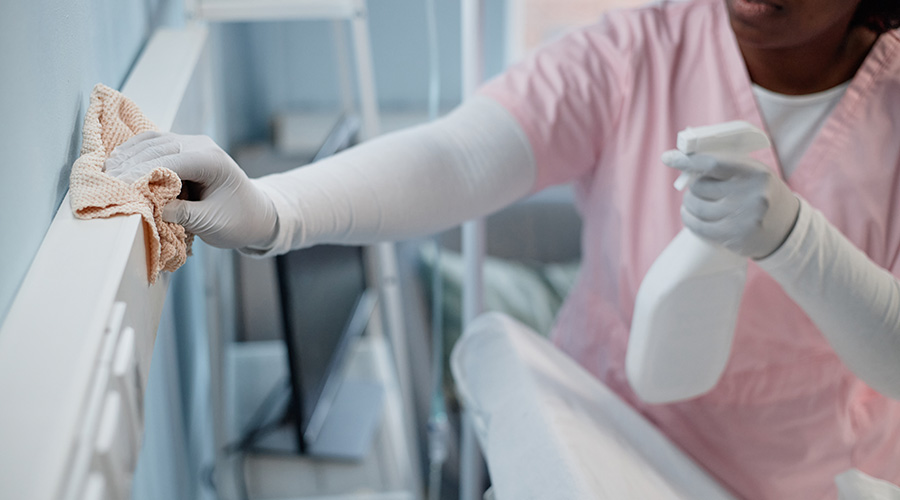
- friction-based wiping with microfiber
- scrubbing high-touch surfaces
- agitation of equipment surfaces and crevices
- removing dried residues before applying disinfectants.
Mechanical disruption transforms disinfection from a surface-level process into a truly penetrative one.
For hospital executives, the message is clear: Environmental hygiene must evolve from applying disinfectants to removing, disrupting and disinfecting. This shift requires training, workflow redesign and a renewed emphasis on the fundamentals of soil removal.
By integrating mechanical disruption and preventive cleaning into standard practice, environmental services managers and crews can significantly reduce the environmental reservoirs that fuel healthcare-associated infections, and they can strengthen patient safety and operational resilience for the long term.
J. Darrel Hicks, BA, MESRE, CHESP, Certificate of Mastery in Infection Prevention, is the past president of the Healthcare Surfaces Institute. Hicks is nationally recognized as a subject matter expert in infection prevention and control as it relates to cleaning. He is the owner and principal of Safe, Clean and Disinfected. His enterprise specializes in B2B consulting, webinar presentations, seminars and facility consulting services related to cleaning and disinfection. He can be reached at darrel@darrelhicks.com, or learn more at www.darrelhicks.com.
 Creating Compassionate Spaces in Healthcare
 Study Shows Connection Between Odor and Patient Experience
 Boca Grande Health Clinic Opens in Florida
 Medical Outpatient Buildings: 4 Trends Bringing Risk, Opportunity
 Building Senior Care Facilities for Harsh Temperatures