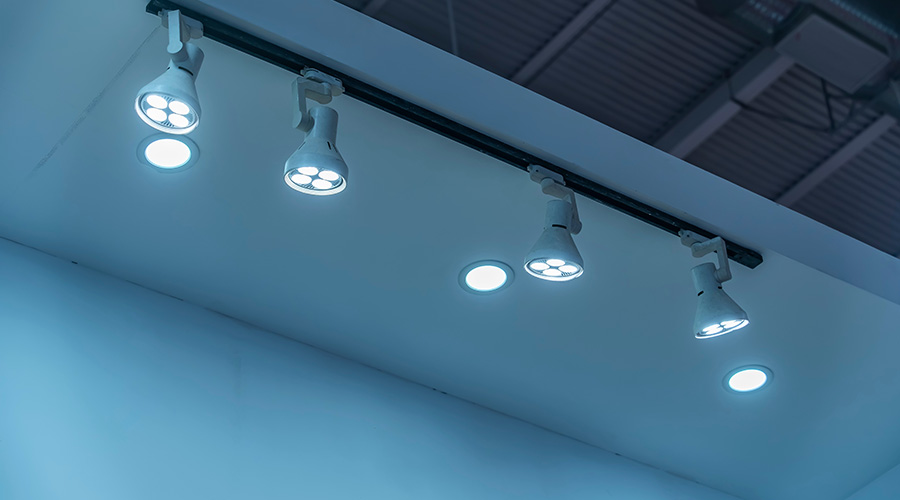
Successful lighting upgrades throughout a portfolio of healthcare facilities require more than the traditional amount of coordination and communication. They require that facilities managers and other team members go beyond the technology and expand their view in order to treat the upgrades as one coordinated effort instead of seeing them as a series of unrelated projects.
Communication is critical
One of the most consistent sources of friction in multi-site healthcare programs is communication and specifically the assumption that the healthcare system will handle internal coordination on its own.
The people who approved the program at the corporate level are not the same people who manage operations at each facility. Clinical staff, facilities managers, department heads and specific staff, such as kitchen supervisors, all have a stake in how and when work is done in their areas. If they are not engaged early in the lighting project, they can become obstacles rather than partners.
During one healthcare kitchen lighting installation, the cook and kitchen manager were essential to completing the work safely and in compliance with food preparation requirements. The team had to work fixture by fixture, carefully covering surrounding areas to prevent contamination. Those steps would not have been identified, let alone executed properly, without early coordination with the right people.
The same principle applies in patient corridors, patient rooms, therapy spaces, exterior areas and back-of-house support spaces. Each area has different access needs, disruption concerns and staff stakeholders. A portfolio program has to account for those differences without losing consistency from site to site. Coordination at that level does not happen by accident. It has to be built into the way the program operates at every site.
HFT Recommends: Brightness to Wellness: The Transformative Power of Lighting Design
Rebate administration belongs in the program
Utility rebate programs are a meaningful lever across a portfolio but only when managed proactively. Each utility territory has its own application cycle, eligible lighting equipment requirements and funding window. Some programs close early. A program manager without visibility across all active projects will miss timing windows that cannot be recovered.
One national rehabilitation healthcare system has captured more than $510,000 in avoided capital costs through rebates administered on its behalf across more than 75 LED lighting projects, part of a program estimated to generate more than $2.3 million in annual energy savings.
Across a national portfolio, rebate administration can involve dozens of utility providers, each with different forms, timelines, pre-approval requirements, product eligibility rules and funding availability.
Maintaining quality at scale
The operational discipline that makes a single-site healthcare lighting retrofit work — scheduling around clinical activity, coordinating with facility staff and carefully managing material flow — has to be replicated at every site in the program. This is where portfolio programs lose quality as they grow. Early facilities get careful attention, but by the tenth or twentieth site, processes have been compressed, communication has gotten thinner, and staff at new facilities are managing surprises that earlier sites did not face.
Sustaining quality across sites requires clear standards, a capable program management structure with specialized functions — project management, audit, financial analysis, energy analysis and photometric design — and field teams that understand healthcare environments, not just lighting installation.
For larger portfolios, quality depends on more than installation labor. It requires a program structure that connects audits, financial analysis, rebate administration, photometric review, procurement, scheduling, field coordination and closeout documentation. When those functions align, each facility benefits from lessons learned at the last one instead of starting over. The projects are the visible output. The program makes them repeatable and makes the next facility easier than the last.
Rebecca Lathe is program manager and director of compliance at Chateau Energy Solutions, where she oversees multi-site lighting and energy-efficiency programs for healthcare systems and large commercial operators nationwide.
Editor’s note: This is part two of a two-part article. Please click here to read part one.
 Creating Healthcare Campus Master Plans That Allow Movement and Respite
 Aspirus Health Celebrates Opening of Chippewa Falls Hospital and Clinic
 AdventHealth to Open Aurora Highlands Medical Campus
 The Future of Healthcare Facility Construction Projects
 Arnprior Regional Health Upgrades Building Controls to Improve IEQ