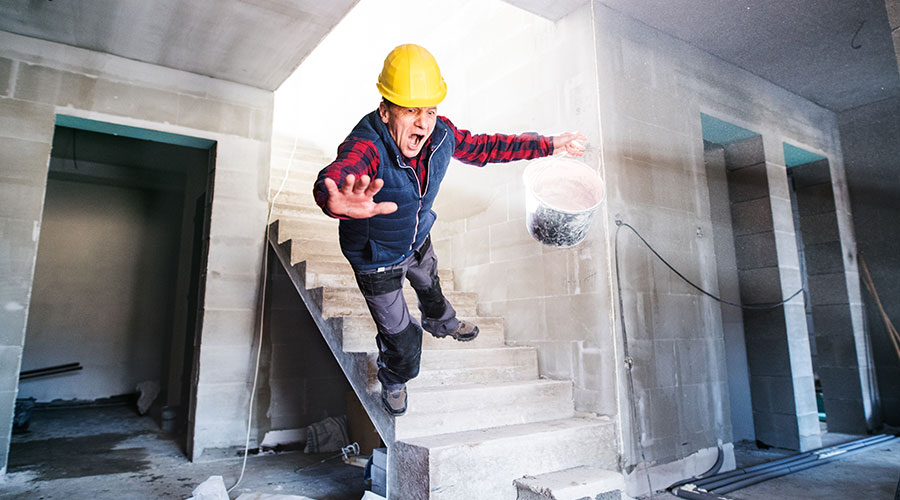
It’s not an exaggeration when a facility manager says that they take safety seriously. If someone gets injured on the job, it could delay projects and potentially cost the company thousands of dollars. Workplace injuries also run the risk of getting investigated by OSHA, adding pressure to an already stressful job.
In recent years, many FMs have started to prioritize safety initiatives while on the job. According to a whitepaper by ISN, serious injury and fatalities (SIF) has dropped by 16 percent in the last seven years. Contact with objects or equipment is the top incident category, making up 60 percent of the injuries. Consistent with OSHA’s severe injury trends, 90 percent of amputations affect hands, fingers or wrists. These types of injuries are often linked to either unguarded machinery or improper use of the equipment, according to the report.
Meanwhile, it is more common for smaller and mid-sized companies to have workplace injuries due to resource limitations, workforce turnover and other exposures to high-risk activities.
More organizations are looking to bolster their safety initiatives to further prevent serious injuries. According to the report, the Human and Organizational Performance (HOP) principle encourages companies to create programs if an error is made, allowing for employees to collaborate with safety professionals. Being able to “fail safely” while avoiding serious injuries and fatalities can change the company culture and further enhance safety practices.
The report found that more employees are willing to report an incident if they feel psychologically safe. Oftentimes accidents go unreported due to fear of being blamed or punished for the injury. When an employer changes the company to culture to continuous learning it improves operations overall. Yes, incident investigation is still critical to safety initiatives, but so is being proactive and acting with information, according to the report. Doing regular audits to identify where weaknesses are in company’s systems can also further prevent serious injuries.
Mackenna Moralez is the associate editor of the facilities market and the host of the Facilities in Focus podcast.
 What Does Light Daily Cleaning Miss in Patient Rooms?
 Smart Lighting Overhaul Boosts Efficiency, Diagnostics and Wellness at Bryan Health
 AdventHealth Opens New Freestanding ER in Florida
 Dirty Floors: How Pathogens Can Accumulate and Spread Underfoot
 WellSpan Health Opens Its Newberry Hospital in Pennsylvania