"Close don't count in baseball. Close only counts in horseshoes and hand
grenades." — Frank Robinson, baseball manager
What does that phrase mean, exactly? It means the world is usually binary. You win, you lose. You hit, you miss. If you lose a baseball game 12 to 11, you only lost by one run, but you lost. Think of, “Close but no cigar.”
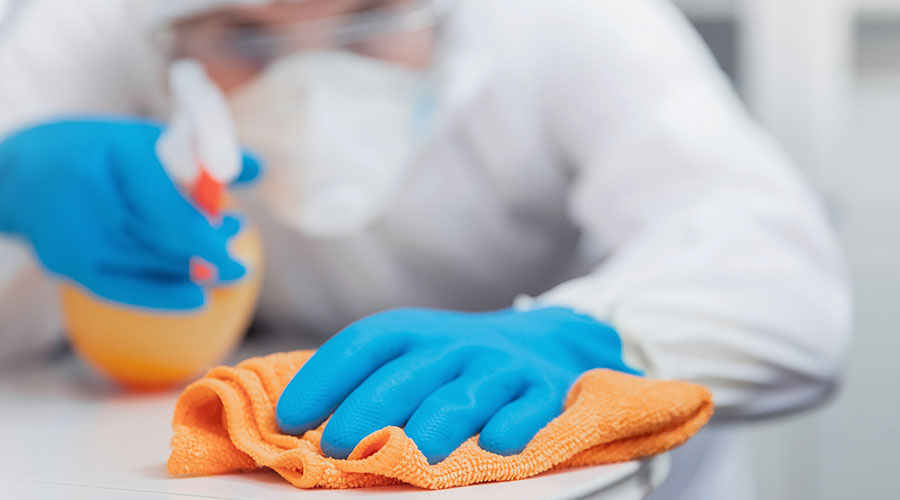
For a chemical to claim disinfection, it must attain a 6-log reduction of specific organisms in a prescribed amount of time. Sterilization means at least a 6+ log reduction while leaving no growth or viable survivors.
It is important to understand log reduction and why it is important to the process of surface disinfection, sterilization and decontamination. Scientists and other professionals responsible or even legally responsible for preventing illness and contamination are concerned with log reduction or elimination of pathogenic bioburden.
A disinfectant kills microbes, but depending on the pathogen, preventing the microbes from getting a foothold by removing food and moisture — two essentials for sustaining living organisms — might be as effective as a chemical disinfectant in the long term.
In fact, most chemical disinfectants cannot do their jobs when more than five percent organic soil is in the way. Soil can absorb the active ingredient, provide more places for the germs to hide and change the chemical nature of the disinfectant.
Surfaces in hospitals and other healthcare facilities can be contaminated with pathogenic organisms — bioburden — and only achieving a log reduction below 6-log means dangerous viruses, bacteria, fungi and Clostridium difficile (C. diff) spores can survive and repopulate surfaces in the treated area. The literature has shown that bioburden can be spread to contaminate patients and grow new bacterial and fungal colonies on new surfaces.
The number of bacterial survivors is important because they can quickly increase their populations exponentially and logarithmically. For example, under ideal conditions, Staphylococcus aureus doubles in 24-30 minutes. This means 1,000 — 10 cubed or Log 3 — bacterial survivors increase to 2,000 after 30 minutes. After 60 minutes, they increase to 4,000. After two hours, they increase to 16,000. After five hours or more, they increase to over 1 million if the growing environment is right.
When it comes to disinfection of environmental surfaces, close does not count. Not only do survivors replicate quickly and efficiently, they can also become resistant to disinfectants. To improve outcomes of room disinfection, disinfectants should only be applied to pre-cleaned surfaces according to the U.S. Environmental Protection Agency and the Centers for Disease Control and Prevention. These agencies require that any hospital cleaning process that claims efficacy against C. diff spores must achieve no growth, which means no survivors that can multiply and create new bacterial colonies.
If the healthcare facility surfaces are to be safe, clean and disinfected, we must have better products, processes and staff education about their role in infection prevention. Being close just is not good enough.
J. Darrel Hicks, BA, MESRE, CHESP, Certificate of Mastery in Infection Prevention, is the past president of the Healthcare Surfaces Institute. Hicks is nationally recognized as a subject matter expert in infection prevention and control as it relates to cleaning. He is the owner and principal of Safe, Clean and Disinfected. His enterprise specializes in B2B consulting, webinar presentations, seminars and facility consulting services related to cleaning and disinfection. He can be reached at darrel@darrelhicks.com, or learn more at www.darrelhicks.com.
 What Does Light Daily Cleaning Miss in Patient Rooms?
 Smart Lighting Overhaul Boosts Efficiency, Diagnostics and Wellness at Bryan Health
 AdventHealth Opens New Freestanding ER in Florida
 Dirty Floors: How Pathogens Can Accumulate and Spread Underfoot
 WellSpan Health Opens Its Newberry Hospital in Pennsylvania