
School-based healthcare centers can be advantageous for communities with a disproportionate number of low income families or at risk children. Adequate access to certain health benefits may pose a problem for disadvantaged families seeking help, but having services readily accessible via a school-based health center could change that. These types of centers are positioned in or adjacent to a school and offer integrated medical, behavioral health, and other health-related services such as dental care. Very recently, two school entities are in the process of obtaining community health centers: Edmonds School District in Washington and Randolph Public Schools in Massachusetts.
The Edmonds School District is in the beginning stages of this process as its board of directors is still discussing plans, according to an Edmonds News article. During one of the board meetings, a member of the nonprofit Washington School-Based Health Alliance was in attendance to address how students could benefit from a school-based health center. The center would be sponsored by a community clinic or healthcare system that would staff and manage it. Possible services to be provided will generally be decided by community need but include primary medical, behavioral health, dental care, health education and substance abuse counseling. If the project is sanctioned, then the center would be the first of its kind in the county. Washington contains 60 health center sites sponsored by over 20 health care organizations in 26 school districts. These sites serve over 53,000 students.
Randolph Public Schools is looking to garner $1.4 million for healthcare-related projects from the federal government, according to The Patriot Ledger. The funds are for three project areas: 1$ million is proposed to go toward building a community health center; $275,000 to help buy more culturally suitable education materials for the school district; and $100,000 for the enrichment of the curriculum to focus on more of a data-driven approach along with professional development. The community’s need for a health center was magnified due to the COVID-19 pandemic. The appeal for the project funds is being led by United States Representative Ayanna Pressley. Her proposals are part of a community project funding initiative from the U.S House of Appropriations Committee.
 Creating Healthcare Campus Master Plans That Allow Movement and Respite
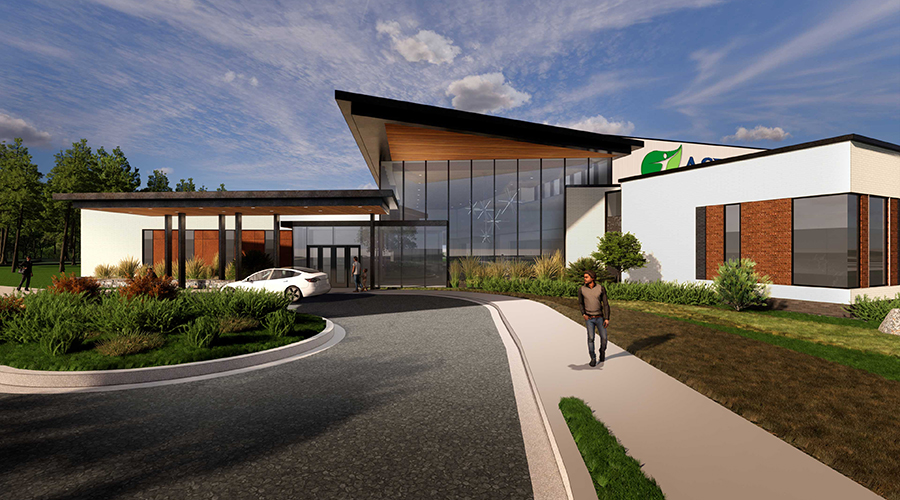 Aspirus Health Celebrates Opening of Chippewa Falls Hospital and Clinic
 AdventHealth to Open Aurora Highlands Medical Campus
 The Future of Healthcare Facility Construction Projects
 Arnprior Regional Health Upgrades Building Controls to Improve IEQ