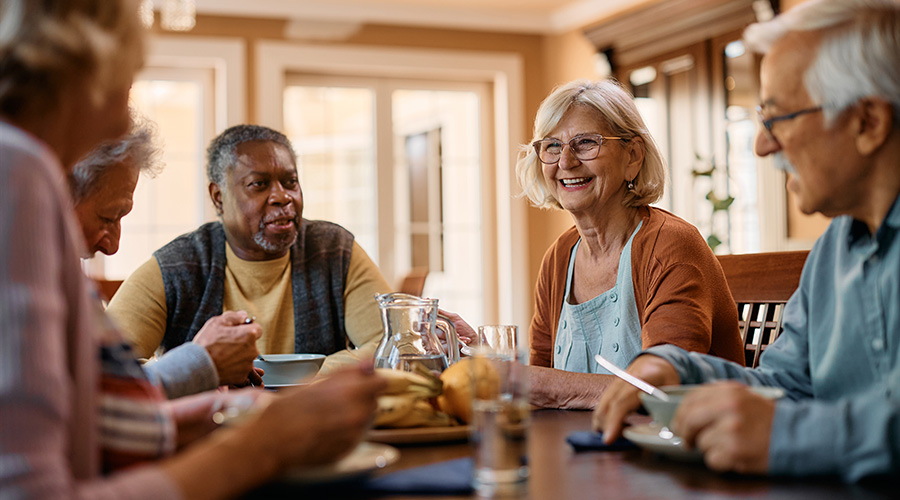
As the demand for senior living facilities continues to surge, with data projecting 100,000 new senior living beds annually through 2040 according to CNBC, developers and designers are under pressure to build communities that can meet the needs of a rapidly growing retiree population. Today’s retirees have entirely different expectations than previous generations. Rather than downsizing into quiet, clinical environments, they are seeking vibrant, hospitality-driven spaces that support wellness and social connection.
“It is not about a sterile healthcare environment anymore,” says Megan Fry, vice president of sales and marketing at Empire & Co. “It’s more of a high-end mixed-use resort environment. In baby boomers' heads, we are still very young and vital.”
That mindset is reshaping every aspect of senior community planning, especially with interior design and furniture selection. Fry notes that while developers are under pressure to build efficiently, they are also recognizing the importance of creating spaces that feel elevated and lifestyle oriented. Senior communities now prioritize amenities like clubhouses, spas, pickleball courts, gardens, walking trails and flexible social spaces that encourage residents to engage with one another.
Furniture helps make these environments functional and welcoming. Unlike traditional senior living facilities that often prioritize durability over experience, today’s active senior communities have furniture that blends comfort, style and adaptability.
“A dining table may transform into a mahjong station. A home office may double as a book club gathering space. Everything that we do is movable and convertible because it’s all about lifestyle,” Fry says.
Designers are also paying closer attention to comfort and accessibility. Fry emphasizes that furniture scale is another major consideration.
“We can’t sit in an overstuffed chair or couch because we can’t get out of overstuffed seating,” Fry says. “It’s also much harder to get around oversized furniture or rearrange it.”
Instead, facilities are incorporating furniture with supportive ergonomics, appropriate seat heights and overall layouts that improve the ease of movement throughout common areas.
Equally important is creating interiors that feel residential rather than clinical. Current design trends favor warm, curated spaces with layered textures, natural light and calming palettes. Fry says residents are gravitating toward spaces that feel cozy, personal and reduce stress while still supporting active lifestyles.
Outdoor environments have also become a major design priority. Fry says that developers often underestimate the importance of investing in outdoor furnishings and gathering areas, even though residents spend significant time outside socializing, gardening or participating in wellness activities.
“Outdoor living is an extension of the house,” Fry says. “We have to treat those spaces more like primary living spaces rather than secondary.”
Ultimately, Fry believes successful senior living communities are no longer based solely around healthcare delivery — they are lifestyle ecosystems designed with wellness and belonging as the top priorities.
“Everything is about social connection,” Fry says. “If we have a tribe, that makes us feel wanted and gives us purpose in life.”
Elaina Myers is the assistant editor of the facilities market. She has covered various topics from pest management to resilience to sustainability and is the beat writer for special days. She also runs the FacilitiesNet social media accounts. Elaina is an avid cat lover and spends all her free time and money traveling the world.
 Elevating EVS Professionals: The Case for Certified Hygiene Specialists
 Global Handwashing Day and the Importance of Well-Maintained Restrooms
 Duke Health and CaroMont Health Partner to Develop Two New Hospitals
 Designing for the Psychology of Waiting
 UT Health Sciences Breaks Ground on College of Medicine Interdisciplinary Building