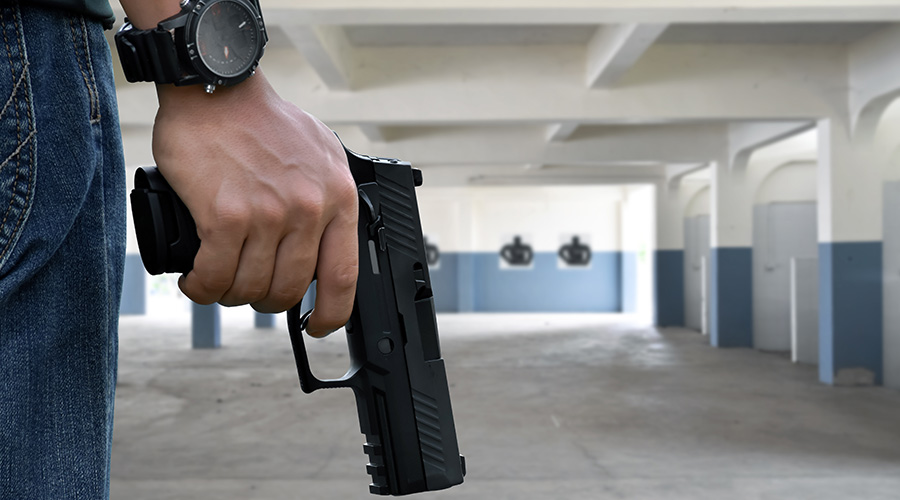
Healthcare facilities must respond quickly in high-stakes and unpredictable situations, as failure to do so can lead to jeopardizing patient safety. For example, situations with active shooters are volatile and can be difficult to control when unprepared.
Mario Green was arraigned and denied bond after pleading not guilty to allegedly murdering his ex-wife in the basement of Detroit’s Henry Ford Hospital, FOX 2 Detroit reports. The shooting triggered a hospital lockdown and citywide manhunt before Green’'s capture. A second man, Anthony Lee-Lamont Barnett, was also charged with helping Green evade police and lying to officers.
A rapid response to active shooter events is crucial due to a hospital’s open nature.
Moreover, hospitals are especially vulnerable to these threats because they are open 24/7 and see high public traffic, which makes access control tricky. Furthermore, sensitive areas such as emergency rooms, waiting rooms, basements and parking structures can prove hard to secure. With these being high-stress and emotional environments, they may face an increased risk of violent incidents.
Related Content: Armed Standoff at West Virginia Hospital Reminds of the Need for Safety Measures
Being aware of potential warning signs is critical to preventing active shooter scenarios. These are some possible indicators that are applicable to all occupants, according to the Cybersecurity and Infrastructure Security Agency (CISA):
- The person displays increasingly unpredictable, dangerous or aggressive behaviors
- The person threatens harm to themselves or others
- Feeling isolated or pulling away from friends and coworkers
- Noticeable drop in work performance
- Sudden major changes in personality or home life
- Being in staff-only or restricted areas without a clear reason
- Stalking or harassing staff or patients
- Expressing anger, grudges or talking about revenge
- Using threatening language, loud outbursts or aggressive behavior
- Staff, students, contractors or volunteers not wearing or showing proper ID badges
If an active shooter event does happen, CISA recommends healthcare facility managers take these actions:
- Share real-time updates with police and first responders from the command center.
- Make sure police know about and can access a first responder kit with maps, keys, radios and other useful tools.
- Stay away from the attacker. If it is safe, evacuate nearby areas, lock down other units and leave belongings behind. Avoid elevators and escalators, encourage others to come and call 911 when possible.
- Protect patients by locking down critical areas like operating rooms, ICUs and treatment areas. Move patients, when possible, to a safe area or designated safe spot in the unit if evacuation isn’t possible.
- If you can’t run, focus on keeping patients and visitors safe by hiding in secure rooms with thick walls and few windows. Silence phones, lock doors and block entryways with furniture or equipment.
- As a last resort, defend yourself and patients. Use whatever is available – such as a fire extinguisher – to disrupt or stop the attacker.
While attacks are rare, hospitals must be ready to act quickly to protect patients, staff and visitors from active shooter incidents. Preparation and training are the best safeguards against the chaos of an unexpected threat.
Jeff Wardon, Jr., is the assistant editor of the facilities market.
 Cooling Towers at NYC Health + Hospitals/Lincoln Test Positive for Legionella
 Prefabricated Wall Panels Accelerate UCF Lake Nona Medical Center Construction
 University of Rhode Island Adds Clinical Space
 How Retail Design Principles Can Improve Healthcare Wayfinding
 Flexible Design Strategies Help OhioHealth Maximize Clinical Space