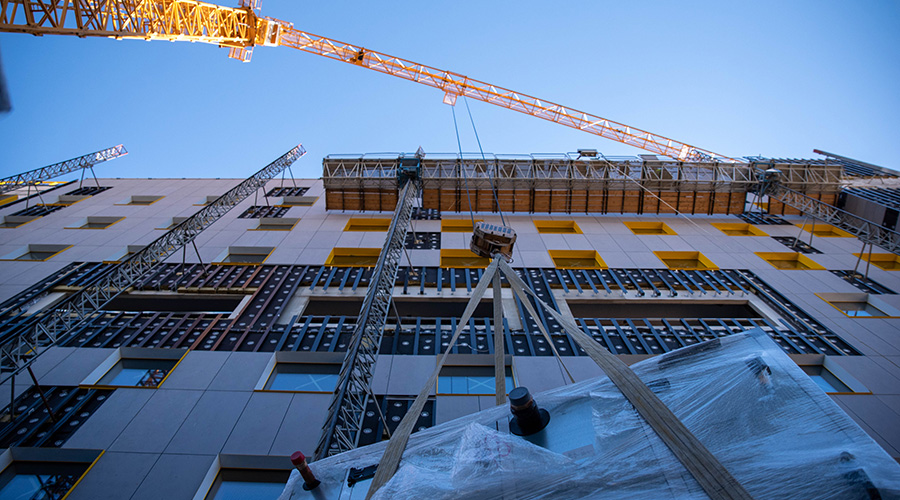
Construction in healthcare facilities requires detailed planning amidst many moving parts, especially when they remain active throughout the process. Beyond coordinating schedules, reallocating staff and moving equipment, facilities must prioritize infection control.
Dust and water aerosols run amok throughout construction, creating huge risks for immunocompromised patients. Thus, it is crucial for environmental services (EVS) to be involved in the construction process. The Centers for Disease Control and Prevention (CDC) established a set of guidelines for environmental infection control in healthcare facilities, with a section dedicated to best practices during construction and renovations.
Establishing the Framework
The CDC first recommends establishing a multidisciplinary team that includes EVS staff to coordinate construction projects, examine proactive preventative measures and maintain activity reports. Then, ensure that both the construction and healthcare teams are educated—in relation to sensitive patient care areas—in the airborne infection risks, fungal spore dispersal and methods of controlling fungal spores.
There should be mandatory adherence agreements in construction contracts, with penalties for noncompliance and a process to ensure a timely correction of issues. Additionally, the entirety of the project should be surveilled and documented.
Before the project begins, undertake an Infection Control Risk Assessment (ICRA) to define the scope of the activity and how many barriers are needed. The assessment should determine if patients are at risk of fungal spore exposure and develop a contingency plan if such exposure should occur.
HFT Recommends: Aligning Construction and Facility Activities to Minimize Problems
Prevention Measures
For outdoor construction activity, determine if the facility can run on recirculated air, then adjacent air intakes should be sealed. If not, the low-efficiency filter banks should be checked regularly and replaced as needed. Seal windows and reduce other sources of outdoor air as much as possible.
Indoor construction areas must have operating air-handling systems after barriers are established. Work zones adjacent to patient care areas must have negative air pressure. Windows should be sealed, if possible, while window chutes can be used for large debris removal so long as negative air pressure is maintained.
Construction crews should have dedicated entrances, hallways and elevators when possible. They should also have access to essential services, like toilet facilities, protective clothing and a space for changing clothing and storing equipment.
Work zones and entrances should be cleaned daily: carts and tools disinfected, mats placed in entrances and securely covering debris before removal. For major construction in patient rooms, plastic sheets must contain the dust before using a negative air pressure system to remove it. Air should pass through an industrial-grade, portable high-efficiency particulate air (HEPA) filter.
Regularly use an airborne-particle sampling tool throughout the construction process. HVAC systems should be set up before patient occupancy and use, with an emphasis on ensuring proper ventilation for operating rooms, isolation areas and sensitive patient care areas.
If an airborne fungal disease occurs, air pressure must be checked, corrective measures taken for any sources of the disease and processes reviewed if no such source is found.
Elisa Miller is an assistant editor for CleanLink.com, Contracting Profits, Facility Cleaning Decisions, and Sanitary Maintenance.
 The Future of Healthcare Facility Construction Projects
 Arnprior Regional Health Upgrades Building Controls to Improve IEQ
 Next Level Medical Suffers a Data Breach
 Extreme Weather: The Maintenance-Resilience Link
 Encompass Health Lower Providence Opens in Pennsylvania