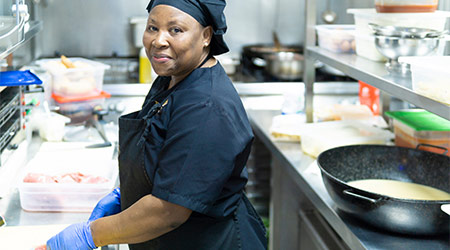
The COVID-19 pandemic has created innumerable challenges for healthcare facilities, from advanced sanitization and PPE shortages to major upgrades of critical systems. At the same time, though, the situation might have uncovered new opportunities and new avenues to efficiency. Consider the impact on food services program and the questions that impact creates.
How do food service managers use staff effectively to deliver a quality product and meet customer expectations for speed of service? Rightsizing foodservice facilities can help lay the groundwork to minimize those challenges, according to Food Management.
Managers can begin with a hard look at the flow of people and products in a facility. Do they logically progress from receiving to storage to prep, cooking, service and warewashing? Are there dedicated and generous pathways for people and products that do not cross into work zones?
Managers also can walk the department with a variety of staff and note breaks in the flow, obstacles to travel and backtracking. Are there enough parking spaces for speed racks and utility carts, or are they clogging walkways? If mobile equipment clutters a kitchen, evaluate how much and what sizes workers really need. For example, could a speed rack give them more capacity and the bonus of taking up less floor space than a utility cart?
Click here to read the article.
 Why Healthcare Facilities Management Is Critical to Patient Safety
  Brookdale Senior Living Announces Acquisition of the Brookdale Galleria Community
 Erlanger Health System Falls Victim to Data Breach
 Technological Readiness: The Missing Construction Milestone
 From Cooling Towers to Cost Savings: Hospital Seizes Power-Saving Opportunity