Note: This is part one of a two-part article.
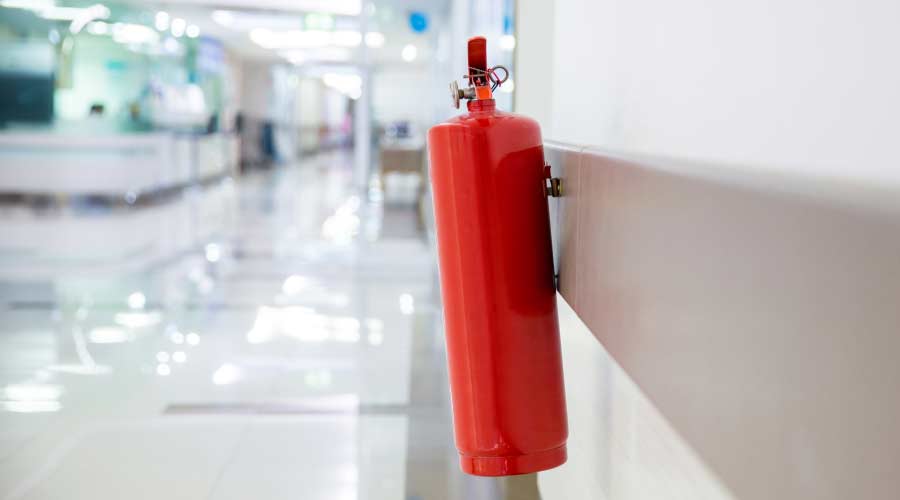
Hospitals and other healthcare facilities present unique challenges when it comes to fire and life safety. Patients essentially live in facilities for days and even weeks at a time, meaning workers must cook meals and keep rooms warm, but the buildings also house combustible and electronic equipment. For these reasons, safety protocols and procedures are essential.
Fire hazards in a healthcare facility can be found in nearly every corner. But with effective, compliant preventive measures, fire and life safety hazards do not have to lead to fires that threaten the health and safety of patients, staff and visitors. Douglas King, vice president and national healthcare sector leader for Project Management Advisors, a national real estate consulting firm, offers insights on the most common fire and life safety hazards in existing healthcare facilities.
Kitchens. “The most common fire events that occur at a hospital occur in the kitchen and during the peak cooking period,” he says. “There's a section that explains why Joint Commission has a deeper interest in food service facilities. I think it's NFPA 96 (Standard for Ventilation Control and Fire Protection of Commercial Cooking Operations) that deals with kitchen hoods. Kitchens are our number one place where fires occur, closely followed by overloaded electrical circuits.”
Door and door hardware. “The issue with doors or hardware in an existing facility is that they are under constant use, and they need constant adjustment and repair,” King says. “If one goes around and surveys the doors on a hospital, there would be a bunch that are not latching, or they would have holes in them for inexplicable reasons.
“Generally, they would not be functioning. Some of that is due to the fact that they get cycled a lot. In many facilities, they have an ongoing process of door maintenance, where one or two carpenters go around all the time working on doors.“
Fire and smoke dampers. “They are difficult to monitor,” King says. “They get monitored in surveys once every four years or something like that. In a typical hospital, there can be many hundreds of these. At any given time, they'll fail to activate because they might have gotten out of plumb, so they don't close. Dampers are difficult to constantly monitor unless one has a remote monitoring program for dampers, but that's a pretty big investment.”
Fire-alarm device activation. “What happens is these devices don't get tested very often after they get installed,” he says. “They get tested haphazardly. As a result, they can be prone to failure. Testing these devices is a huge nuisance to the staff, so it’s not done very often or very thoroughly.”
Storage areas. “Healthcare facilities are always short on storage,” King says. “It's an area that gets cut during programming and planning for square footage. People are very creative in where they put storage, and storage is actually considered a hazardous use by the code and requires some code upgrades or upgrades for life safety to have a compliant storage area.”
Penetrations and IT systems. ”It's a verity that when a facility opens, most all the penetrations would be sealed accurately,” King says. “But I can guarantee that IT tends to add a lot of wiring after the building is open. And they're not particularly well known for being robust in fixing the penetrations. It's something we see constantly.”
King also points out one fire and life safety hazard that occurs frequently during new construction of healthcare facilities.
"When construction is occurring in a hospital, we've actually created a hazardous use,” he says. “Frequently when areas are under construction, they don't have typical life safety systems like sprinklering, detection and fire separations present in them. There's often welding going on in these areas, and they can create fire hazards. NFPA 241 (Standard for Safeguarding Construction, Alteration, and Demolition Operations) deals with mitigating the risk of construction activities in a facility. It has been adopted by the other model codes.”
Dan Hounsell is senior editor of the facilities market. He has more than 30 years of experience writing about facilities maintenance, engineering and management.
 Cleanliness in Hospitals: Clinical Priority and Community Perception
 Dana-Farber Receives $50M Gift for Planned Cancer Hospital
 Clarinda Regional Health Center Reports Data Security Incident
 Gaps in Nurses' Environmental Cleaning Knowledge Grow Amid Rising EVS Pressures
 Ground Broken on the Southern Nevada Forensic Facility