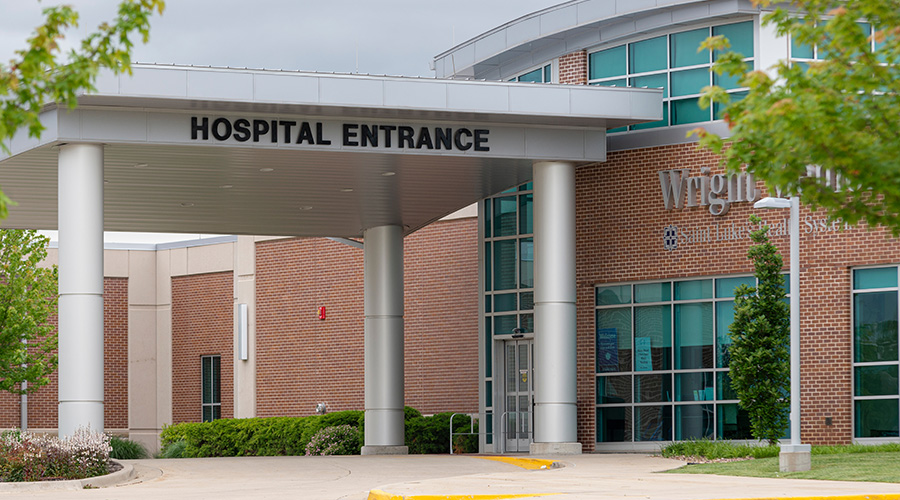
For many hospital visitors, the most stressful part of a visit happens before they ever reach a reception desk. Finding the right entrance can be difficult. So can navigating parking garages and managing the distance from vehicle to doorway, especially for older adults, patients using mobility aids and family members assisting them. A route that looks routine on a site plan can feel very different on the ground, particularly for visitors already focused on health concerns or tight appointment schedules.
These conditions are not accidental. They trace back to decisions made years earlier that determined the amount of space set aside for parking, the location of entrances and the way traffic was expected to move. For healthcare facility managers, those choices are typically shaped by capacity targets and land constraints. But they also set the tone for arrival, influencing accessibility, first impressions and whether visitors reach the front door calm and on time.
When arrival infrastructure is treated as part of the patient experience, early design decisions become a powerful tool for reducing patient anxiety.
Reducing barriers at the front door
Most arrival challenges are not dramatic. They show up as small frictions that add up quickly: parking located farther from entrances than expected, drop-off lanes that become congested during peak hours, signage that exists but is difficult to interpret while driving and routes that require multiple turns, elevators or staff handoffs.
For visitors with mobility limitations, each additional step increases physical strain and uncertainty about timing. A short detour or moment of confusion can mean arriving late or fatigued before entering the facility. Even small delays can compound stress before the visit begins.
Much of this friction is built into the site itself. Long walking distances and indirect routes create fatigue, while complex circulation patterns add cognitive strain. Visitors can find themselves stopping mid-path to check signage, scan for elevators or confirm they are heading the right way. These are obstacles encountered before care even begins.
Straightforward design choices can reduce these burdens. A clearly marked drop-off lane near the entrance prevents congestion during peak periods. Unobstructed sightlines help visitors orient themselves when they exit their vehicle. Consistent symbols, high-contrast lettering and straightforward route logic make navigation far easier for aging eyes and those using mobility aids.
Space allocation: An experience strategy
Hospital campuses rarely have excess land. As patient volumes grow, parking demand often becomes the dominant planning constraint, pushing facilities to prioritize vehicle capacity where possible. Over time, this challenge often results in layouts that meet parking demand on paper but offer little flexibility for the way patients and visitors move through arrival areas.
An experience-oriented approach to space planning begins by looking beyond stall counts alone. It considers how efficiently people can transition from vehicle to doorway, as well as the way circulation patterns affect safety, clarity and comfort along the way.
When circulation is planned holistically and vehicle storage is handled more efficiently through structured parking, shared-use strategies and other space-saving approaches, valuable frontage space can be preserved for visitors. That space allows for larger, better-organized drop-off areas that reduce congestion during peak periods. It also creates wider pedestrian pathways that safely accommodate wheelchairs and walkers. And it makes room for waiting zones near entrances, where caregivers can assist without obstructing traffic flow.
Even modest spatial adjustments can change the way arrival feels. Clear separation between pedestrian and vehicle zones reduces confusion and improves safety. Nearby seating or sheltered respite areas give mobility-challenged visitors a place to pause before entering busy interiors.
Rethinking valet and assisted arrival
Valet services in healthcare facilities often are viewed as premium amenities. They are useful but not essential. Yet for many mobility-challenged visitors, assisted arrival functions as a critical access tool. It reduces walking distances, simplifies navigation and creates a more predictable handoff from vehicle to facility entrance.
The effectiveness of these services depends heavily on the way they are incorporated into site design. When valet operations share limited space with general drop-off traffic, congestion can build quickly, creating confusion and delays. By contrast, dedicated staging zones allow vehicles to queue safely without blocking circulation, while clearly separated traffic patterns reduce conflicts between valet and self-parking flows.
The way these services connect to mobility assistance matters just as much. In many senior living communities, assisted arrival is treated as core infrastructure rather than an optional service. Staff are positioned where they can immediately provide wheelchairs, guide visitors and coordinate smooth transitions at entry points. Hospitals can apply similar principles.
Infrastructure and the patient experience
For mobility-challenged visitors, the tone of a hospital visit is often established well before any clinical interaction begins. The ease of locating an entrance, the clarity of the route to the doorway and the availability of assistance all shape whether arrival feels manageable or overwhelming.
Individually, each infrastructure decision might seem minor. Taken together, they shape first impressions, affect punctuality and influence how confidently visitors can navigate a complex campus.
For this reason, arrival pathways warrant greater attention as part of the patient experience strategy. Facilities managers, patient experience teams and clinical operations all bring important perspectives on the way people move through a site and where friction occurs. Collaboration among these groups can ensure infrastructure investments support accessibility outcomes alongside capacity and efficiency goals.
As healthcare systems modernize their campuses, treating arrival infrastructure as part of care delivery offers a practical way to improve access and reduce friction at the point where visitors first interact with the facility.
Christopher Tiessen is president and CEO of KLAUS Multiparking America.
 Creating Healthcare Campus Master Plans That Allow Movement and Respite
 Aspirus Health Celebrates Opening of Chippewa Falls Hospital and Clinic
 AdventHealth to Open Aurora Highlands Medical Campus
 The Future of Healthcare Facility Construction Projects
 Arnprior Regional Health Upgrades Building Controls to Improve IEQ