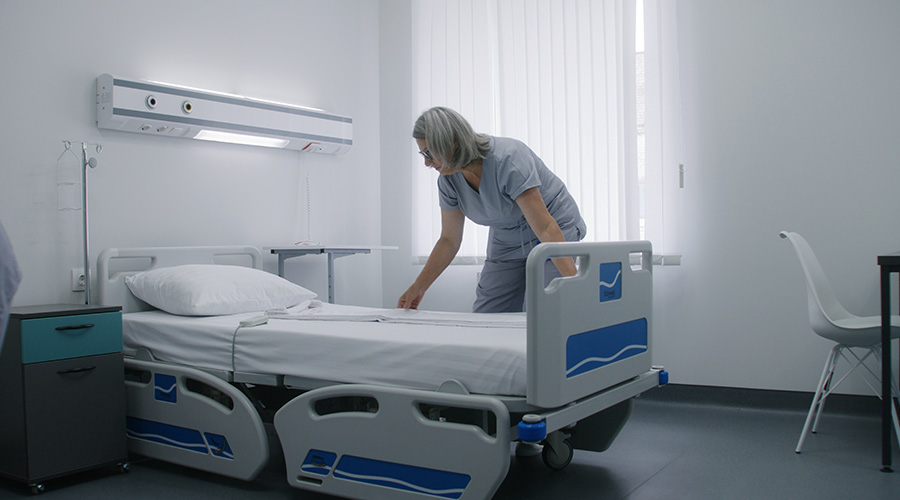
Many patients in healthcare facilities are likely experiencing some level of pain or discomfort, making a soft, clean bed a safe space during a potentially difficult time. Before leaving the laundry, all linens must meet strict hygiene standards. However, as environmental services (EVS) staff transport them to staff and patients, clean materials can obtain bacteria from equipment and bedrails, as well as visitors and staff themselves.
To avoid healthcare-associated infections (HAI), facilities must ensure that linens—such as sheets, pillowcases, curtains, towels, and mattresses— remain clean during transportation and use. While there are often formal, test-based processes in place for cleaning hard surfaces, soft surfaces and products are not subject to standard testing that verifies they can be properly disinfected by Environmental Protection Agency (EPA) products, according to Medline.
Handling Dirty Laundry
The Center for Disease Control and Prevention (CDC) has a guide for linen and laundry management best practices. Staff should always wear reusable gloves before touching soiled linens and placing them in the correct container, avoiding carrying dirty linens against the body. Rather than shaking out soiled linens, they should be rolled up to prevent contamination.
Solid excrement, such as vomit or feces, should be scraped off with a flat, firm object and put in the commode or designated toilet before being placed in the linen container. Soiled linens should be placed in a clearly marked, leakproof container in the patient care area. Staff must not transport the linens by hand outside the patient area from where it was removed.
Related Content: Mattresses Require Strict Care to Prevent Spread of Infections
The designated container for soiled linens must be cleaned and disinfected after each use. If reusable linen bags are used inside the container, they should not be overfilled. Staff must take care to tie them securely and launder after each use. Soiled linen bags may be laundered with the soiled items they contain.
Keeping Laundered Linens Clean
Maintaining clean linens is just as important as properly removing soiled ones. The CDC suggests sorting, packing, and transporting clean linens in a manner that prevents cross-contamination by debris, dust, or soiled linens. Each floor or ward should have an appointed room for organizing and storing clean linens.
There should be designated clean linen carts or containers for transportation to patient rooms. These must be cleaned at least once daily with a natural detergent and warm water solution. If there are protective curtains on carts, they must also be properly cleaned.
Clean Beds
While bedsheets may be properly laundered and transported to maintain hygiene, reusable pillows present a risk of cross-contamination. To avoid variability in disinfection techniques, facilities should establish clear guidelines for pillow and bed decontamination.
According to Medline, pillows and pillowcases should be easily cleanable in a hot water laundry cycle. They should be washed between patients or if contaminated with body substances.
Mattresses must have covers in addition to bedsheets. Covers should be replaced when torn, while mattresses should be replaced when visibly stained.
Many facilities and EVS staff focus on the hard surfaces in patient rooms, but the soft ones can be just as dangerous for spreading infection. Creating proper transportation, storage, and replacement procedures guarantees safe, hygienic spaces for patients and staff alike.
Elisa Miller is an assistant editor for CleanLink.com, Contracting Profits, Facility Cleaning Decisions, and Sanitary Maintenance.
 Cooling Towers at NYC Health + Hospitals/Lincoln Test Positive for Legionella
 Prefabricated Wall Panels Accelerate UCF Lake Nona Medical Center Construction
 University of Rhode Island Adds Clinical Space
 How Retail Design Principles Can Improve Healthcare Wayfinding
 Flexible Design Strategies Help OhioHealth Maximize Clinical Space