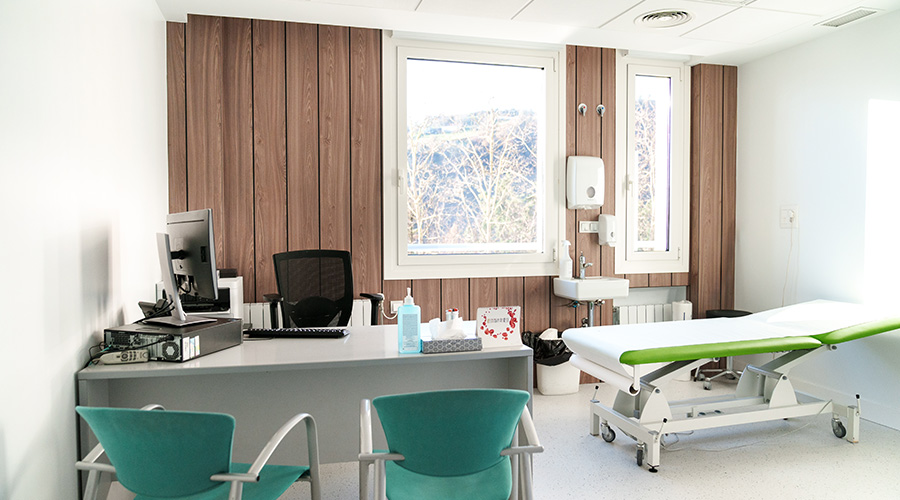
As medical outpatient building (MOB) occupancy climbs and new construction remains constrained, healthcare organizations are being forced to reassess how they use the space they already have. That shift is driving a more analytical, data-driven approach to space utilization, with facilities teams drilling down to exam room-level insights to uncover hidden capacity.
Additionally, the rapid migration of services from hospitals to outpatient settings is transforming MOBs into far more complex environments — requiring hospital-grade infrastructure, tighter operational coordination and earlier collaboration between design, construction and facilities teams.
Healthcare Facilities Today spoke with Connie O’Murray, managing director of property management at JLL, to better understand how healthcare organizations and facilities teams are tackling these emerging complexities.
HFT: With new MOB development remaining limited and occupancy rates rising, what strategies are facilities teams using to maximize existing space and maintain efficiency?
Connie O’Murray: It really comes down to supply and demand. Right now, the market is working in the landlord’s favor. Occupancy is high — approaching an all-time high of nearly 93 percent — while new construction starts are still below 2019 levels. So, there are clear constraints in the system.
We’re also consistently seeing absorption outpace delivery. That scarcity is creating real pricing power for investors and landlords, with new construction rents nearly double in-place rents. That opens up a significant mark-to-market opportunity for value enhancement.
Related Content: Outpatient Surge Reshapes Long-Term Strategy for Medical Outpatient Buildings
For facilities teams, the challenge has become more of an art than a science, which means getting creative with the real estate they already have. Some systems are now analyzing how their space is actually being used, not just at the suite level, but down to individual exam rooms. They’re identifying unused capacity within facilities and looking for ways to better utilize that space.
This kind of granular space utilization analysis reveals patterns: exam rooms used only in the mornings, procedure spaces sitting dark on Fridays and entire suites underutilized due to outdated scheduling. That data is becoming central to expansion strategies.
It’s not just about granular insights, either. There’s also a more holistic view taking shape. Whether organizations are using real estate technologies to analyze portfolios or digging into site-level data, there’s a clear shift toward more data-driven decision-making.
HFT: As outpatient facilities become more complex — integrating surgery centers, imaging and specialty services — how is this impacting building design, infrastructure and day-to-day operations?
O’Murray: These aren’t your grandpa’s medical office buildings anymore. They’re much more complex and holistic, and that complexity has definitely increased.
You’re seeing a lot of services shift out of hospitals — out of acute care settings — and into outpatient buildings. As a result, some of these facilities now require hospital-grade HVAC systems with multiple zones, higher air changes and greater capacity, along with more robust electrical and plumbing systems, sophisticated medical gas systems and enhanced infection control measures.
From an operational standpoint, that creates real challenges. It’s no longer a standard, across-the-board, typical MOB. In some cases, teams are orchestrating work around pre-op, procedure and recovery spaces all at the same time, alongside routine clinical care.
Maintenance windows for equipment have to be carefully coordinated around clinical schedules, which often means 24/7 monitoring and a lot of work happening after hours. It requires a different level of expertise and finesse than traditional MOBs, which were largely made up of clinics and dental offices.
That’s why real estate companies like JLL are getting involved earlier, ideally during the design phase, because infrastructure decisions made today will determine operational efficiency for the next 20 years. There’s also earlier involvement from the management side during development, helping influence construction outcomes and ensuring teams have a deep understanding of the building before they take over operations, given the level of complexity involved.
Jeff Wardon, Jr., is the assistant editor of the facilities market.
 The Future of Healthcare Facility Construction Projects
 Arnprior Regional Health Upgrades Building Controls to Improve IEQ
 Next Level Medical Suffers a Data Breach
 Extreme Weather: The Maintenance-Resilience Link
 Encompass Health Lower Providence Opens in Pennsylvania