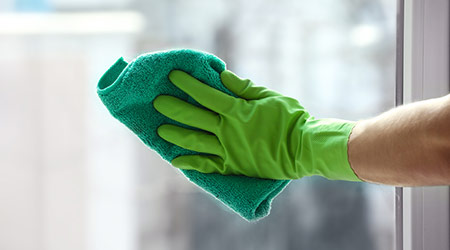
The spread of germs from one surface or object to another and frequently occurs when performing janitorial tasks. Effective cleaning and disinfection can reduce this cross contamination, according to an article on the Infection Control Today website.
Contaminated mop heads and towels are common causes of cross contamination, but janitorial worker’s gloves can also be problematic.
Researchers have found that germs can survive on gloves and can be transferred to other surfaces during the cleaning process.
OSHA’s standards require the use of gloves to protect the hands of janitorial workers. But OSHA regulations don’t address cross- contamination issues or infection control.
The following suggested protocols are based on Centers for Disease Control and Prevention (CDC) guidelines:
Put on task-appropriate gloves before performing cleaning tasks and
change them in the following situations:
• When they become visibly soiled, torn or punctured
•After cleaning areas with high concentrations of germs, such as restrooms, kitchens
•When changing the color of the towel you’re using (with a color-coded microfiber towel systems)
•When going from building to building or floor to floor
 Why Healthcare Facilities Management Is Critical to Patient Safety
  Brookdale Senior Living Announces Acquisition of the Brookdale Galleria Community
 Erlanger Health System Falls Victim to Data Breach
 Technological Readiness: The Missing Construction Milestone
 From Cooling Towers to Cost Savings: Hospital Seizes Power-Saving Opportunity