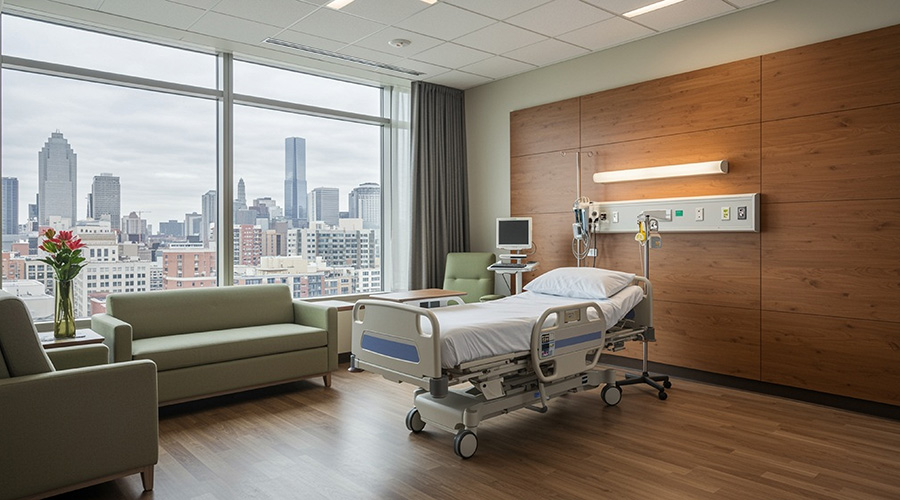
Healthcare design conversations tend to focus on the patient journey, and rightfully so. But some of the most rewarding moments in this work happen when a nurse walks through a finished space and quietly says, “You actually listened.” It rarely comes down to sweeping architectural moments or high-end amenities.
More often, it is the small things: a supply cabinet placed exactly where it needs to be, a corridor that shaves two minutes off a shift’s worth of walking, a workflow that no longer requires a workaround. These are not glamorous wins, but they are real, and they matter because nurses and caregivers are the ones who actually live in these spaces, moving through them hour after hour, shift after shift.
When their daily frustrations are taken seriously during the design process, something changes. The work becomes a little less exhausting and a little more sustainable. That energy, or the recovery of it, finds its way to the patient. Time saved for staff is time given back to patients. The two experiences are not separate, and they never really were.
Design that accommodates caregivers
What drives design work is the belief that caregivers deserve to feel that someone thought about them not as an afterthought but as the whole point — a space that removes obstacles, eases stress and quietly signals that the people working within it are valued.
That is what good healthcare design can do. That is the reason the most valuable insights often come from candid conversations with caregivers early in the process about what slows them down, what creates unnecessary pressure and what would genuinely make their jobs easier. Their workflows, routines and frustrations with the status quo should influence planning decisions from the very beginning.
Across a lot of our projects, many of these requests are surprisingly consistent because the challenges staff face often are universal. That consistency is telling. It means these are not isolated complaints but systemic gaps that design can actually address.
HFT Recommends: Designing for Caregiver-Centered Support Spaces
Details that define a shift
The industry tends to focus on large-scale retention efforts, including respite lounges, wellness spaces and visible amenities. Those elements matter, but many caregivers speak more readily about the smaller frustrations that repeat themselves throughout a shift, such as replacing lower cabinet doors with drawers, eliminating protruding hardware that staff constantly bump into during fast-paced movement, and organizing storage around how people actually work.
These details might seem minor when looked at in isolation, but over the course of a long shift, they meaningfully affect comfort, efficiency, and stress levels in all kinds of facilities — inpatient, outpatient, hospitals, standalone medical offices and more.
The way healthcare workers move through a space matters, too. Nurses spend much of their days traveling between patient rooms, storage areas, workstations and support spaces. Each added step costs time, compounds fatigue and chips away at efficiency.
Thoughtful planning can shorten those distances, simplify circulation and position functions closer together. These decisions might not be visible to patients, but they directly influence the quality of care delivered.
Design as an act of dignity
Caregiver well-being also is shaped by the emotional experience of the environment itself. One of the most memorable conversations a project was with a radiology staff member working deep below grade who asked, “Can we get a window?”
The question was not about aesthetics. It was about wanting a connection to the outside world during a long shift to know what the weather looked like and to feel a little less cut off. Not every constraint can be solved, but there are usually opportunities to create small moments that help staff feel more human at work. Whether it is natural light, a quiet corner to decompress or a locker room that does not feel like an afterthought, these gestures add up.
Design alone cannot solve burnout or fix retention, but it can reduce friction, simplify routines and contribute to a genuine sense of dignity in the workplace. That requires more than delivering a finished space. It means bringing caregivers into the process, helping them understand new workflows and technologies and staying connected through walkthroughs, post-occupancy conversations and ongoing communication. The gap between what staff asked for and what they experience on move-in day often is where trust is lost. Closing that gap is part of the work.
Healthcare facility designers do not practice medicine, but their work is still a meaningful way to contribute to patient care. The future of healthcare design is not defined by major innovations or headline amenities alone. It is shaped by thoughtful, human-centered decisions that make caregivers' lives a little easier every day.
Claudia Opel is managing associate at TPG Architecture.
 Cooling Towers at NYC Health + Hospitals/Lincoln Test Positive for Legionella
 Prefabricated Wall Panels Accelerate UCF Lake Nona Medical Center Construction
 University of Rhode Island Adds Clinical Space
 How Retail Design Principles Can Improve Healthcare Wayfinding
 Flexible Design Strategies Help OhioHealth Maximize Clinical Space