
A new study proposes that understanding how microbes interact with patients, staff, and hospital surfaces within the microbiome of a hospital environment can contribute to infection control efforts, according to an article on the Med City News website.
The study, published in Science Translational Medicine, suggests that contaminated environments increase the risk of transmission of healthcare associated infections. Few studies have focused on the hospital room microbiome and whether the data might adjust the approach to room cleaning, the article said.
Over the course of a patient’s hospital stay, the study found that patient’s skin and room surfaces became “microbially similar.” The longer patients stayed in their rooms, the more antibiotic-resistance genes the organisms in the environment acquired.
The study suggested the environment is inherently stressful for the bacteria due to regular cleaning so any organisms that survive would have a greater likelihood of being able to acquire genes that could be relevant.
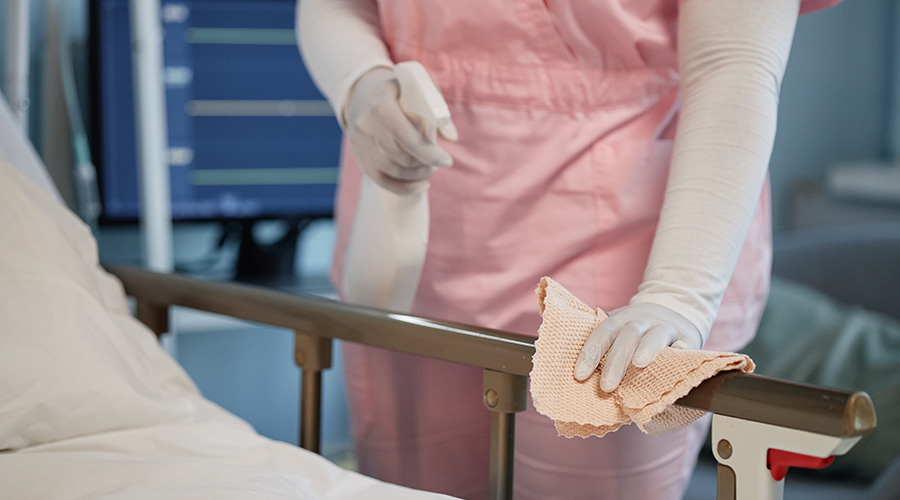 Gaps in Nurses' Environmental Cleaning Knowledge Grow Amid Rising EVS Pressures
 Ground Broken on the Southern Nevada Forensic Facility
 Jackson Hospital Falls Victim to Third-Party Cybersecurity Incident
 Making Healthcare Lighting Retrofits Work
 Stadium Design is Reshaping Healthcare Facilities