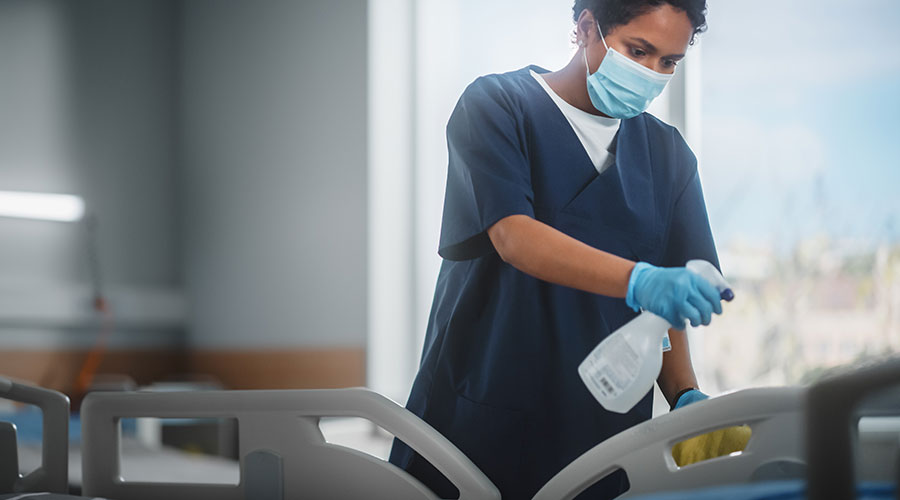
While demand for more effective cleaning and disinfecting is growing, evidence also is increasing that proves exposure to cleaning and disinfecting practices can result in acute and chronic health problems, particularly respiratory illness. One study indicated that for women but not men, the long-term effects of cleaning with chemicals, whether occupationally or domestically, were comparable to smoking a pack of cigarettes a day for over 20 years, causing accelerated decline in lung function.
Antimicrobial resistance remains a pressing public health concern and a leading cause of death around the world. Treating infections with antibiotics is a decision made by the healthcare provider after carefully considering the benefits and risks of treatment.
But healthcare providers might not think carefully about the benefits and risks when using antimicrobial products liberally to disinfect high-traffic surfaces, such as door handles and exam tables. Like their pharmaceutical counterparts, antimicrobial disinfectants also can come with side effects and might contribute to the rise of superbugs.
Antimicrobial disinfectants serve a critical public health purpose: to decrease the spread of disease. But as we know with antibiotics, overusing products has a downside. Not only can antimicrobials such as quaternary ammonium compounds (QAC) contribute to antimicrobial resistance. The evidence of harm to human health from exposure to QACs is increasing.
The COVID-19 pandemic magnified the use of disinfectants and alcohol-based sanitizers in healthcare settings. On top of the overzealous use of wipes, sprays and cleaning solutions, the pandemic also boosted the relatively new trend of putting antimicrobials on nonporous items and in durable goods, such as pillows, socks, furniture and airplane brochures.
Some healthcare facilities, such as Emory Healthcare, have discontinued the use of QACs, opting instead for hydrogen peroxide-based products. Not only do these products provide improved effectiveness. They also have drastically decreased necessary drying time by over half, reducing the required 10-minute drying time for QACs to 1 minute. Emory Healthcare employees have reported improved workplace satisfaction, and turnover times for patient care room have fallen drastically.
The National Institute for Occupational Safety and Health has documented elevated asthma and chronic obstructive pulmonary disease proportionate mortality rates in the healthcare industry. Over 40 articles have documented the association of cleaning products — specifically disinfectants — used in hospitals with asthma. This includes antigen challenge testing with specific disinfectants, which is the gold standard for showing causal relationship for chemical-induced asthma.
Six disinfectant families used in hospitals meet the criteria for the Association of Occupational and Environmental Clinics for substances rated as causing asthma. The cases of work-related asthma could be caused by work with or near bleach, quats or other chlorine-based products, peracetic acid, phenolics and hydrogen peroxide.
Because disinfectants are classified as pesticides, these products should be used in strict accordance with product labels. Environmental services managers should be concerned and informed about the oral and dermal toxicity of all chemicals used in their facilities. They need to check safety data sheets that provide acute toxicity and technical information about products.
J. Darrel Hicks, BA, MESRE, CHESP, Certificate of Mastery in Infection Prevention, is the past president of the Healthcare Surfaces Institute. Hicks is nationally recognized as a subject matter expert in infection prevention and control as it relates to cleaning. He is the owner and principal of Safe, Clean and Disinfected. His enterprise specializes in B2B consulting, webinar presentations, seminars and facility consulting services related to cleaning and disinfection. He can be reached at darrel@darrelhicks.com, or learn more at www.darrelhicks.com.
 Creating Healthcare Campus Master Plans That Allow Movement and Respite
 Aspirus Health Celebrates Opening of Chippewa Falls Hospital and Clinic
 AdventHealth to Open Aurora Highlands Medical Campus
 The Future of Healthcare Facility Construction Projects
 Arnprior Regional Health Upgrades Building Controls to Improve IEQ