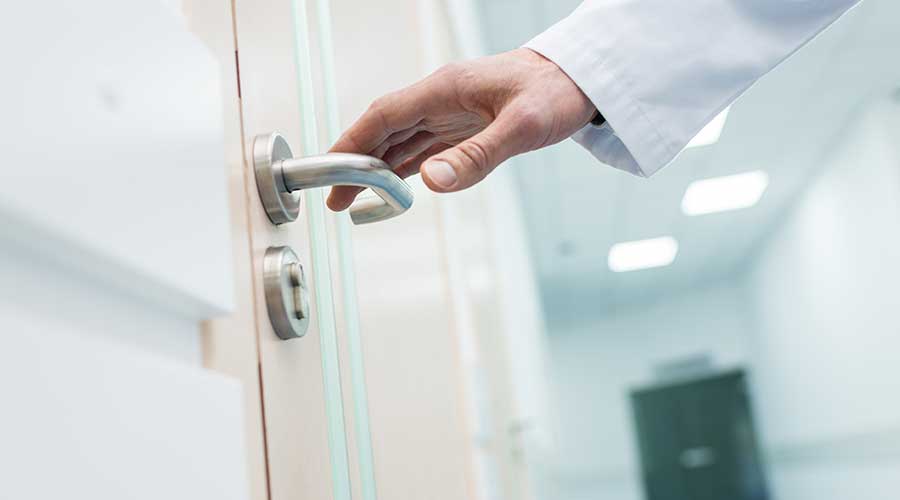
The latest internet debate asks this question: Are there more doors or wheels in the world? While the question remains unanswered, many people are adamant that the number of doors far surpasses the number of wheels. Either way, people generally do not realize how much decision making goes into choosing the most appropriate doors and hardware for a healthcare facility. Each decision plays a direct role in the safety of a building, and choosing incorrectly can have detrimental consequences. Healthcare Facilities Today spoke with manufacturers of doors and door hardware to ask what managers should consider when specifying these products.
What should facilities managers consider when choosing door/hardware products? How can they make a difference within a healthcare facility?
“When considering what door is the right door for healthcare facilities, there are a few things to consider. First, where is this door going to be located? Is it a main entrance with high traffic or a patient room? Is there certain code/rating this door needs to comply with? Horton Automatics offers doors for every application need. Selecting the right door will provide the user with ease of use and functionality.”
— Ashley Estrada, product manager, Horton Automatics
“It should go without saying, but facility managers must thoroughly understand the building code requirements for each and every access point and develop a comprehensive compliance plan. This plan should address both fire and panic egress hardware, as well as caring for ADA requirements and any unique local, municipal or state codes or requirements related to door hardware.
Beyond the basic legal requirements, healthcare facilities face a very unique set of challenges when designing their environments. While door hardware may seem to some like a relatively trivial concern, savvy facilities executives understand that access points define the way people, materials and even information move throughout a healthcare environment. Knowing this, facilities managers must consider doors and door hardware among the most critical components of their physical infrastructure.”
— Paul Canon, industry leader – healthcare, SALTO Systems
“Healthcare facilities are very complex, and facilities managers have many challenges they face when it comes to choosing and implementing door hardware products. Typical matters of life safety, like fire codes, durability and physical security, are there but amplified by other challenges that many facilities do not have to consider. Infection control, patient experience, sound considerations, child abduction, suicide risk and wandering patients add extra layers of consideration. Facilities managers must be organized and forward thinking in their approach to choosing door hardware, with building standards and redundancy top of mind. This can also save the facility money in the long run.”
— Uriah Parker, project sales manager – Midwest, Allegion
 Sustainability as a Baseline in Healthcare Facilities
 Penobscot Valley Hospital Reports Data Security Incident
 Ballad Health Acquires Land for Future Unicoi County Hospital
 Why Healthcare Facilities Management Is Critical to Patient Safety
  Brookdale Senior Living Announces Acquisition of the Brookdale Galleria Community