Key Takeaways:
- Skilled trades staffing shortages and growing training demands can leave healthcare facilities workers with less time to prepare for emergencies that threaten critical systems and patient safety.
- Professional memberships and industry networks connect healthcare tradespeople with technical resources, peer expertise and guidance on evolving codes and standards.
- Sharing lessons learned, connecting newer workers with experienced professionals and accessing ongoing education can help healthcare facilities teams identify preparedness gaps and improve emergency response.
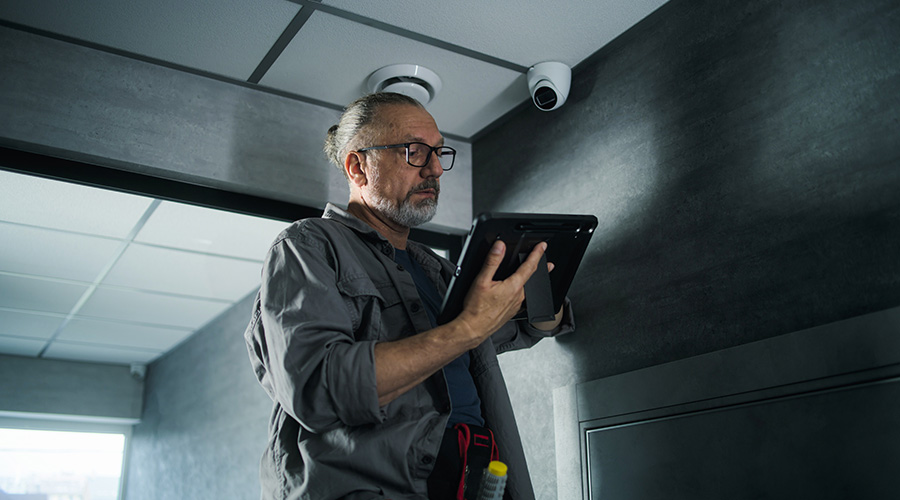
Skilled trade workers are silent backbones of facilities, and healthcare facility workers specifically keep the systems and infrastructure that hospitals rely on running safely around the clock. Though every industry carries its fair share of emergencies, healthcare trade workers function under particularly high-stakes pressures: The way they react directly affects patients in those facilities.
Still, healthcare facilities departments face staffing shortages that make it increasingly difficult for these workers not only to do their everyday jobs but also to prepare facilities for the emergencies that could come at any minute.
By 2030, an estimated 2.1 million skilled trade jobs in the United States could go unfilled. Not only does this mean potential economic loss. It also means heavier workloads for the skilled trade workers who remain.
As technology continues to advance and codes and standards follow suit, the growing gap between the demands of the job and the time available for training can harm a healthcare facility’s emergency preparedness.
The consequences of being unprepared are deeply human. Power outages, medical gas failures, water disruptions, fires, equipment malfunctions and hazardous material incidents can quickly become threats to vulnerable patients and staff that care for them.
As time and resources remain valuable and scarce for this group of skilled trade workers, professional memberships have emerged as a convenient and efficient way to access practical resources, stay current on critical changes and learn from peers facing many of the same challenges. Just as healthcare professionals work together to deliver the highest caliber of patient care, skilled tradespeople need to work together to maintain the systems that facilitate that care.
The importance of preparedness
Every industry has its own set of high-stakes tasks, but because of the nature of hospitals, healthcare facilities have an additional, needed layer of precision and preparedness. A disruption that might inconvenience another facility can quickly become an emergency when patients’ lives hang in the balance.
For example, a power outage might temporarily halt operations in a manufacturing facility. But in a hospital, even a brief interruption can put ventilators, operating rooms and other life-support systems at risk. Or consider the loss of water pressure, which might seem like an inconvenience for other industries. In a hospital, it can disrupt everything from dialysis to sterilization and create an immediate risk to patient safety.
HFT Recommends: How Healthcare Facilities Can Prepare for All Types of Emergencies
These examples underscore how interconnected hospital operations are and how quickly an infrastructure issue can become a safety emergency. Because hospitals cannot shut down when something goes wrong, skilled trade workers responsible for keeping these systems running need to be ready to respond to emergencies with little warning. They often do this through ongoing research, planning and training, but the problem is that trade workers often have little time in their day to dedicate to these crucial tasks.
Roadblocks to preparedness
For many skilled trade workers in healthcare facilities, the biggest barrier to preparedness is time. As ongoing labor shortages continue to stretch many hospital trade workers thin, those who remain often are asked to take on more responsibilities: preventive maintenance, day-to-day troubleshooting and responding to immediate operational needs. These are critical job functions, but when one worker is asked to take on too many of them, the time available to step back and plan for emergencies is almost nonexistent.
To make matters worse, the environments these workers are responsible for change constantly. New technologies, equipment and processes, as well as the accompanying updates to codes and standards, require workers to continually build on their knowledge, but that training often takes a backseat when the list of daily tasks to get done continues to grow.
Healthcare trade workers are being asked to operate in a time, staffing and expertise deficit, but that system is unsustainable. These skilled trade workers need a way to access research, training and collective knowledge, and many have turned to professional membership programs to fill that gap.
Professional memberships: A path forward
In an era when time and labor are in short supply, professional memberships and industry communities can serve as a force multiplier for healthcare trade workers. Rather than asking already-stretched workers to find time to build emergency preparedness resources, research every new requirement and solve every unfamiliar problem on their own, professional communities give them access to ready-made resources, ongoing education and the collective knowledge of their peers.
In fact, 65 percent of skilled workers identified networking and collaboration with other industry professionals as a benefit of their professional memberships and these industry communities, according to a recent survey from NFPA. For healthcare trade workers, that support can take several forms:
Put collective knowledge into action. Labor shortages mean fewer people are available to troubleshoot a problem, but memberships ensure skilled trade workers can connect with other professionals even when they are not in the same facility. Digital forums and membership networks can connect a technician facing an unfamiliar issue with peers who have encountered something similar, helping them find potential solutions in a fraction of the time.
Simplify complex codes and standards. Keeping up with changing codes and standards can be a significant undertaking on its own, and with the demands on today’s healthcare facilities, it is even more challenging. Professional communities can provide condensed resources, guidance and practical interpretations that help workers understand the changes that matter most to their facilities without requiring them to sift through information on their own time.
Give newer hires access to experienced peers. As waves of experienced workers continue to retire, newer professionals often have fewer seasoned colleagues in their own facilities to provide for guidance. Professional communities can help fill that gap by creating opportunities to ask questions, learn from experienced practitioners and benefit from lessons that might otherwise take years for them to learn on their own.
Strengthen preparedness through shared experiences. Emergency preparedness is ongoing, and one facility’s experience can help another identify gaps before facing the same challenge. When members share lessons learned from their own emergency experiences or preparedness planning, those insights can help workers think beyond their existing plans and identify where they might need to strengthen their preparedness or rethink workflows.
Ultimately, professional communities give healthcare trade workers a way to extend their knowledge and network beyond the walls of their own facilities — and do so in a quick and simple way. When time and staffing are limited, having these trusted resources readily available and a broader community to lean on can help workers stay prepared without adding another to-do to their list.
Susan McArdle is membership director with the National Fire Protection Association.
 Ground Broken on Lavine Bekenstein Cancer Hospital in Massachusetts
 Camden-on-Gauley Medical Center Reports Data Security Incident
 Elevating EVS Professionals: The Case for Certified Hygiene Specialists
 Global Handwashing Day and the Importance of Well-Maintained Restrooms