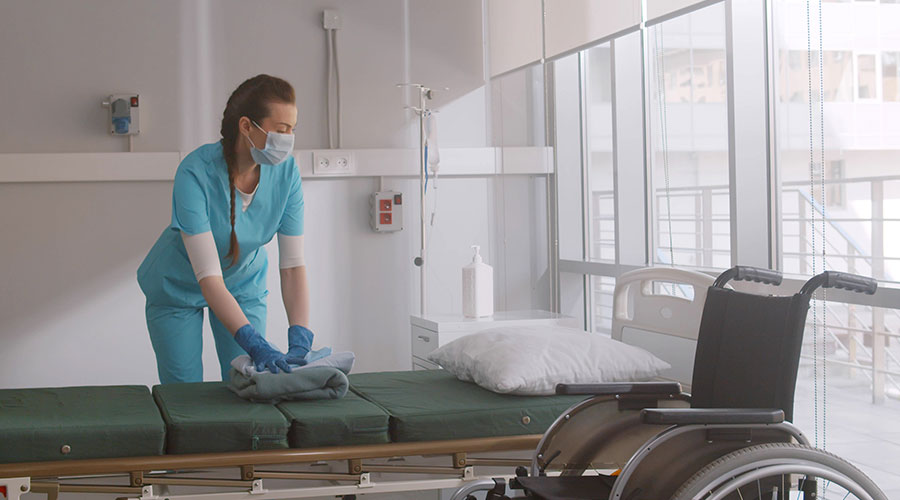
Floors and hard surfaces get most of the cleaning attention, however, soft furnishings are just as critical to a healthcare facility’s image and safety. With upholstered furniture being in patient rooms, waiting rooms and break areas, their maintenance shouldn’t be overlooked. In this manufacturer roundtable, Healthcare Facilities Today spoke with furniture manufacturers about how often upholstery should be cleaned and maintained.
How often should the healthcare facility managers have the upholstery of their furniture cleaned and maintained?
“This would depend on how high traffic in the area is, and it is important that cleaning instructions are followed properly to ensure the lifespan of the upholstery.”
— Cindy Lawton-Moreby, vice president of sales, Allseating / Stephanie Smith, marketing director, Allseating / Scott Leyden, sales representative, Allseating
Related Content: Cleaning Strategies for Furniture, Furnishings and Patient Care Equipment
“Routine cleaning on all upholstered surfaces should ideally be done daily, as healthcare facilities are more prone to harbor bacteria and viruses than other types of spaces, and any surface where these can survive should be disinfected often. A deeper maintenance clean should be performed every week. Facilities should also prioritize products that are inherently antibacterial and antimicrobial in their selection, to minimize the risk of bacteria lingering on surfaces.”
— Mary Holt, chief design strategist, Carnegie
“Infection control has become increasingly important mainly for patient safety but also to avoid potential financial penalties due to HCAHPS. With that, following regular cleaning protocols is extremely important.
In a clinical setting, patient rooms should be cleaned after each use – sanitizing both furniture and high-touch surfaces to battle the spread of illness or infection. Caregivers’ seating, workstations and work-tools get continuous cleaning with disinfecting wipes by users and daily cleaning.
Public or community spaces should have spot cleaning protocol as well as daily deep cleaning. Of course, this consistent disinfecting requires furniture with surface materials that stand up to these cleaning agents.”
— Rod Vickroy, Assoc. AIA, RID, LEED AP, vertical brand segment manager, Haworth
Jeff Wardon, Jr., is the assistant editor of the facilities market.
 Cleanliness in Hospitals: Clinical Priority and Community Perception
 Dana-Farber Receives $50M Gift for Planned Cancer Hospital
 Clarinda Regional Health Center Reports Data Security Incident
 Gaps in Nurses' Environmental Cleaning Knowledge Grow Amid Rising EVS Pressures
 Ground Broken on the Southern Nevada Forensic Facility