
Healthcare organizations continue to expand outpatient services, but growth is no longer driven solely by demand. Staffing shortages in key specialties and ongoing consolidation among health systems are forcing leaders to rethink where they build, how they manage facilities and what role the built environment plays in attracting both clinicians and patients.
Healthcare Facilities Today spoke with Connie O'Murray, managing director of property management at JLL, about how workforce challenges are influencing service line expansion and why specialty care is increasingly concentrated in regional hubs.
HFT: How are staffing shortages in high-growth outpatient specialties influencing facility planning and decisions around service line expansion?
Connie O’Murray: Staffing can be a primary factor in expansion decisions because you can build the most beautiful, functional building, but if you can't staff it, it really doesn't matter.
Some health systems have actually walked away from expansions in high-growth specialties — maybe orthopedics, ophthalmology or gastroenterology — simply because they can't recruit the clinical talent they need.
Because of those staffing challenges, it's driving some interesting facility strategies. We're seeing more concentration of specialties in larger hubs where recruitment can be easier, operations can be more efficient, patients are attracted to the location and services can be shared across departments.
Organizations might give up some geographic coverage, but by consolidating in a specific location, they're able to leverage those efficiencies and continue offering those specialty services.
HFT Recommends: MOBs Get Smarter and More Complex as Space Pressures Mount
We're also seeing spaces being designed to maximize efficiency at the clinician level by developing facilities that better support staff. That can mean clustering support services, enabling team-based care models, and reducing administrative burdens through technology. Some organizations are even incorporating physician-centric amenities as recruitment tools.
That might mean quiet reflection spaces where physicians can get away and decompress rather than being in the general clinic environment. It could mean workout facilities or app-based amenities such as food delivery services.
Taking a holistic approach to both physician and patient care is really a top-line consideration right now and something facilities professionals should be thinking about.
Instead of the old mindset of, "If we build it, they will come," the model has shifted to, "Will they come?" If we build it, can we get the people we need to staff it?
HFT: With continued consolidation among health systems and provider groups, how is the approach to site selection, leasing and facility management evolving?
O’Murray: That's really an area we're focused on a lot right now because consolidation is reshaping the landscape. A lot of that consolidation is driven by the need to create efficiencies across portfolios while also expanding into more communities.
As a result, health systems are ending up with these large, sometimes unwieldy real estate portfolios that can be difficult to manage. There's also increased private equity ownership and continued portfolio growth on the investor side, so managing facilities across those portfolios is becoming more challenging.
In many cases, the challenge is geographic. Going back to the rural discussion, health systems are still trying to support rural communities, which often means operating locations in geographically difficult areas. That can make it harder to provide the level of service they want to deliver.
Because of that, many organizations are looking beyond their internal facilities teams and turning to third-party support to create more consistency in service delivery and strengthen brand loyalty through a standardized approach.
They're using data to help determine where locations should be, but once they have those locations, they need a strategy for managing them. We were talking with a health system recently, and they said, "It's a competitive market, but we have all this real estate. You can go to one location, and it looks completely different from another. The signage is different. The patient experience is different. We want to elevate our brand through consistency and use data to support how we deliver patient care."
Once again, that's where effective facility management can play a critical role. Understanding the impact facilities have on the patient experience is essential.
If you're managing an office building, you might focus on providing modern amenities and services, but you're not necessarily thinking about whether the person walking through the door will return. Health systems must think about that every day.
Elevating the experience for physicians and patients alike can help drive growth across the system. The bottom line is that policy changes create uncertainty, and we need to keep an eye on them. But the structural fundamentals — demographics, the migration toward outpatient clinics and consolidation — remain strong. Because of that, we're expecting a healthy environment for growth in 2026, both for investors and occupiers.
Jeff Wardon, Jr., is the assistant editor of the facilities market.
 Elevating EVS Professionals: The Case for Certified Hygiene Specialists
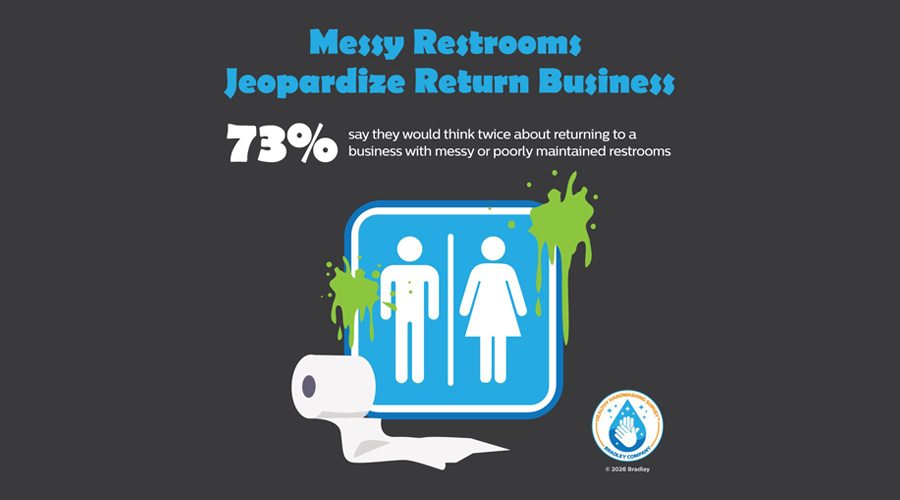 Global Handwashing Day and the Importance of Well-Maintained Restrooms
 Duke Health and CaroMont Health Partner to Develop Two New Hospitals
 Designing for the Psychology of Waiting
 UT Health Sciences Breaks Ground on College of Medicine Interdisciplinary Building