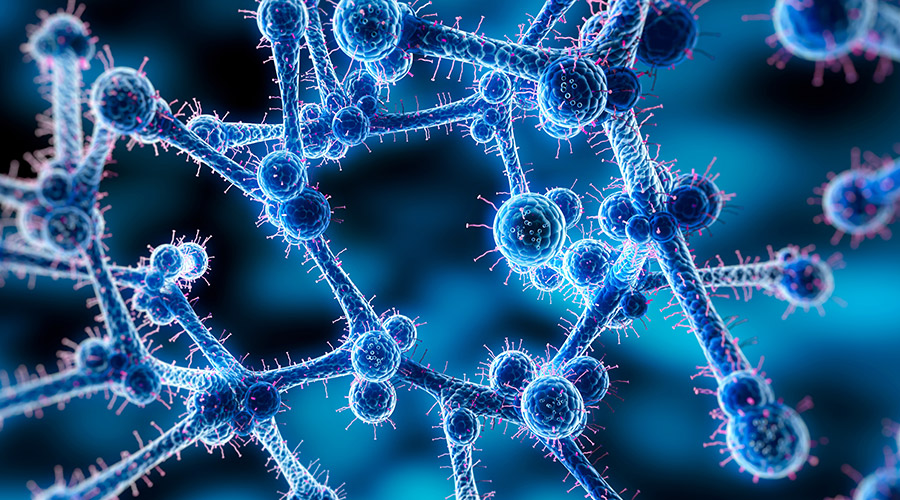
Candida auris (C. auris) is a multidrug-resistant yeast that poses significant challenges in healthcare settings. Environmental contamination is suspected to play an important role in C. auris transmission, so understanding the speed and risks of contamination after room disinfection should inform environmental services managers’ environmental cleaning recommendations.
Here are some facts for managers to consider:
- Based on national notifications to Saudi Arabia's Ministry of Health, C. auris was the preeminent cause of healthcare-associated infections (HAI) outbreaks in 2023.
- A large outbreak of 122 cases occurred at King Saud Medical City from June 2021 to June 2022.
- A total of 1,240 outbreaks were reported in 2023. These included 2,392 patients, 2,703 infections and 806 deaths. Outbreaks caused by fungi — mainly C. auris — and Gram-negative bacteria together accounted for 90 percent of the total. C. auris accounted for 30 percent of the outbreaks — more than any other pathogen.
- Mortality is high: 30-60 percent of patients with C. auris succumb to the illness.
- C. auris is highly persistent in the environment and can survive for weeks on surfaces.
- An environmental reservoir such as biofilms tends to enable its persistence and ability to survive on surfaces and devices even longer, up to months.
- C. auris spreads easily from person to person and from contaminated surfaces to a person.
- Infected and colonized patients can shed C. auris onto bed mattresses and other near-patient surfaces, such as privacy curtains.
Is a hospital-wide sporicidal being used? Managers should know about the chemicals used to disinfect in their facilities. They also should know the equipment moving into and out of patient rooms and their points of contact. Are there glucose meters, blood pressure cuffs, computers on wheels? Mobile electronic computing devices, including phones, tablets? Mobile patient care equipment?
Related: Biofilms: Top-Tier Threat to Surface Disinfection
Environmental services are not responsible for most patient care equipment. Patient care personnel — nurses, respiratory therapists, etc. — use disposable wipes to clean their own equipment. The hospital facility must be using the same hospital-wide sporicidal.
Among the additional considerations for managers:
- Where was an EPA List P/K + Biofilm claim product used or not used on a particular surface?
- What product was used on floors, glass and stainless steel?
- Look to improve patient areas with alternative products, disposables and hard-surface alternatives for soft surfaces, such as blood pressure cuffs.
- Are workers covering nursing stations and ancillary areas of patient care floors with environmental services optimal hard-surface disinfectants at least once per day?
- Are workers addressing soft surfaces, such as exchanging privacy curtains and mattresses?
Biofilms inherently resist most chemical disinfectants, and C. auris is well known to thrive in biofilm. Recently, a trend has emerged for disinfectant manufacturers to evaluate their product’s performance against biofilms.
EPA Letter Lists tests are for isolate/planktonic cells in suspension to make kill claims, not for cells taken from the natural environment that might be found in a protective layer of bacterial biofilm. There are shortcomings when relying on only the current EPA Letter Lists when evaluating disinfectants.
Many common disinfectants cannot kill bacteria in a biofilm, but there is an EPA test for a disinfectant biofilm claim. EPA’s LIST P includes antimicrobial products registered for claims against C. auris. There are 38 products from 13 chemical manufacturers on List P. Unfortunately, there is no biofilm list, and claims can only be found on chemical master labels.
C. auris creates its own biofilm that is quite dangerous. If a disinfectant does not kill the pathogenic organisms in biofilm, it is not disinfecting.
J. Darrel Hicks, BA, MESRE, CHESP, Certificate of Mastery in Infection Prevention, is the past president of the Healthcare Surfaces Institute. Hicks is nationally recognized as a subject matter expert in infection prevention and control as it relates to cleaning. He is the owner and principal of Safe, Clean and Disinfected. His enterprise specializes in B2B consulting, webinar presentations, seminars and facility consulting services related to cleaning and disinfection. He can be reached at darrel@darrelhicks.com, or learn more at www.darrelhicks.com.
 Hospitals Are Energy Super-Users. Why Is It So Hard to Modernize Them?
 Encompass Health Rehabilitation Hospital of Bangor Officially Opens
 Early Entry: Manager's Critical Role in Construction Planning
 The Evolution of Lighting in Patient Care
 HealthPartners and Essentia Health to Combine Organizations