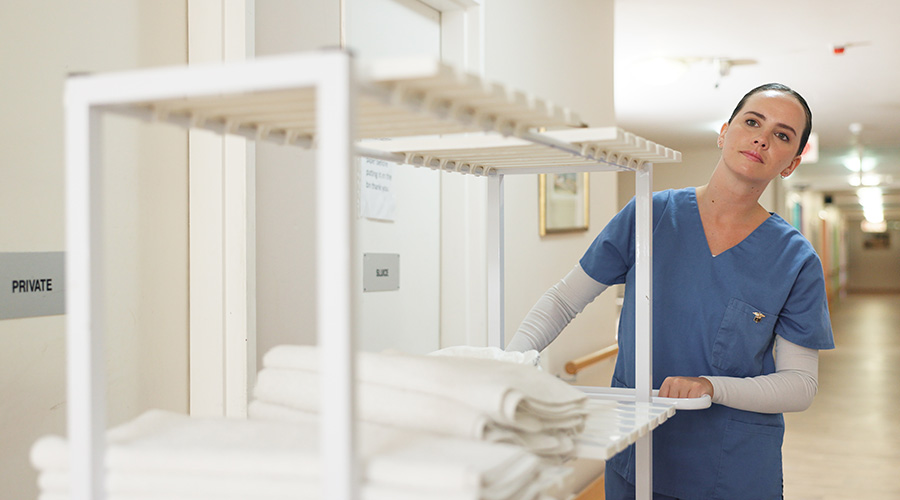
In-house laundry services are among the top high-volume operations in healthcare facilities, so managing them is no small feat. From maintaining expensive machinery to coordinating large teams, day-to-day operations can quickly get complicated. As a crucial aspect of controlling the spread of infection and ensuring overall cleanliness, laundry facilities must be organized and prepared.
Earl Smith, the Director of Linen Services at Memorial Hermann Health System, Houston leads a team of 175 employees that provides essential items to 14 major hospitals in the Greater Houston area. With over 32 years at Memorial Hermann, Smith has cultivated several tips and tricks to managing high-volume operations. This year alone, they’re expected to wash over 35,000 pounds of laundry.
Breaking Down Management
While he does most of the directing from his office, Smith is still on the floor every day managing operations. Interacting with staff face-to-face is crucial for maintaining relationships and morale, according to Smith.
“It’s treating them like a friend,” he says. “Saying ‘hi’ to them every morning or when you walk by. I may greet them three to four times a day. Just talking and being a part of the team is so important.”
Smith ensures that managers are cross trained across the operation. They are familiar with operating all the equipment in addition to digital tasks like inventory and shipping. Maintenance, however, is kept separate, for which they have a handful of dedicated staff.
Related Content: 3 Nuances of Cleaning and Disinfection in Healthcare
The training process at Memorial Hermann’s laundry facilities takes three to four weeks. New hires train with individual employees at different locations. Each section of the operation has different standards and methods, but Smith believes the one-on-one training has new staff prepared to work alone at each location at the end of those four weeks.
When it comes to productivity, Smith contends they’re not as tough as other operations.
“I look at having more flexibility within my plant,” he says. “I’m willing to give up a week or two for employees to meet the standards I’m looking for. It can be very useful, and the employees are more comfortable.”
Productivity is also one of the few processes that is not automated. Smith prefers to take productivity numbers in real time in front of employees. This approach, he says, is more personal and direct. Conflict resolution is much easier, whether that’s correcting mistakes or adjusting techniques to improve output.
“With a computer taking numbers, employees don’t know if they got credit for all their work,” notes Smith. “Doing it personally takes away some of the stress of automation.”
Smith has cultivated a strong team in his years as director. He says they’re very committed to their jobs and have gained a lot of knowledge in the last few years. How does he create quality culture in such a large operation? They make it a family.
“While we know it’s Memorial Hermann’s laundry, we treat it like it’s our laundry and our responsibility to the customers.” Smith reflects, “We’re like a family business. We may disagree on a few things here and there, but the goal is making sure that we do our job.”
Elisa Miller is an assistant editor for CleanLink.com, Contracting Profits, Facility Cleaning Decisions, and Sanitary Maintenance.
 Parking: Where the Outpatient Land Crunch Shows First
 Clear Behavioral Health Opens New Outpatient Mental Health Center in Anaheim Hills
 Bon Secours Begins Construction on Freestanding Emergency Department in Norfolk
 The OR HVAC Puzzle: Why Individual Systems Are on the Rise
 Skanska Completes Renovation of Specialized Care Facility for Sutter Health